

Start with the roof profile
Above the roof, every Lumasol kit shares its rail and its end and inter clamps for 30 mm and 35 mm frames, so settle the roof first: only the interface that meets it changes. The rib is the raised profile of the roof sheet that the roof clamp grips.
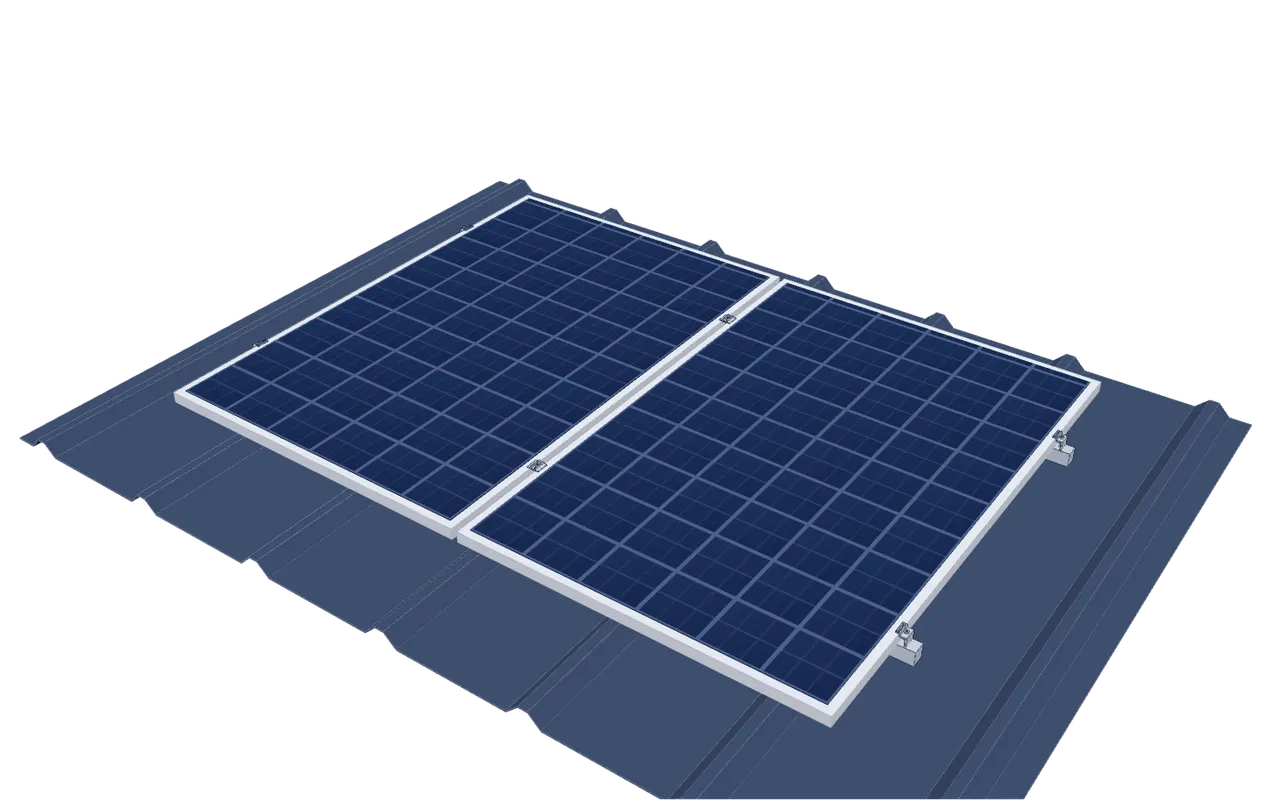
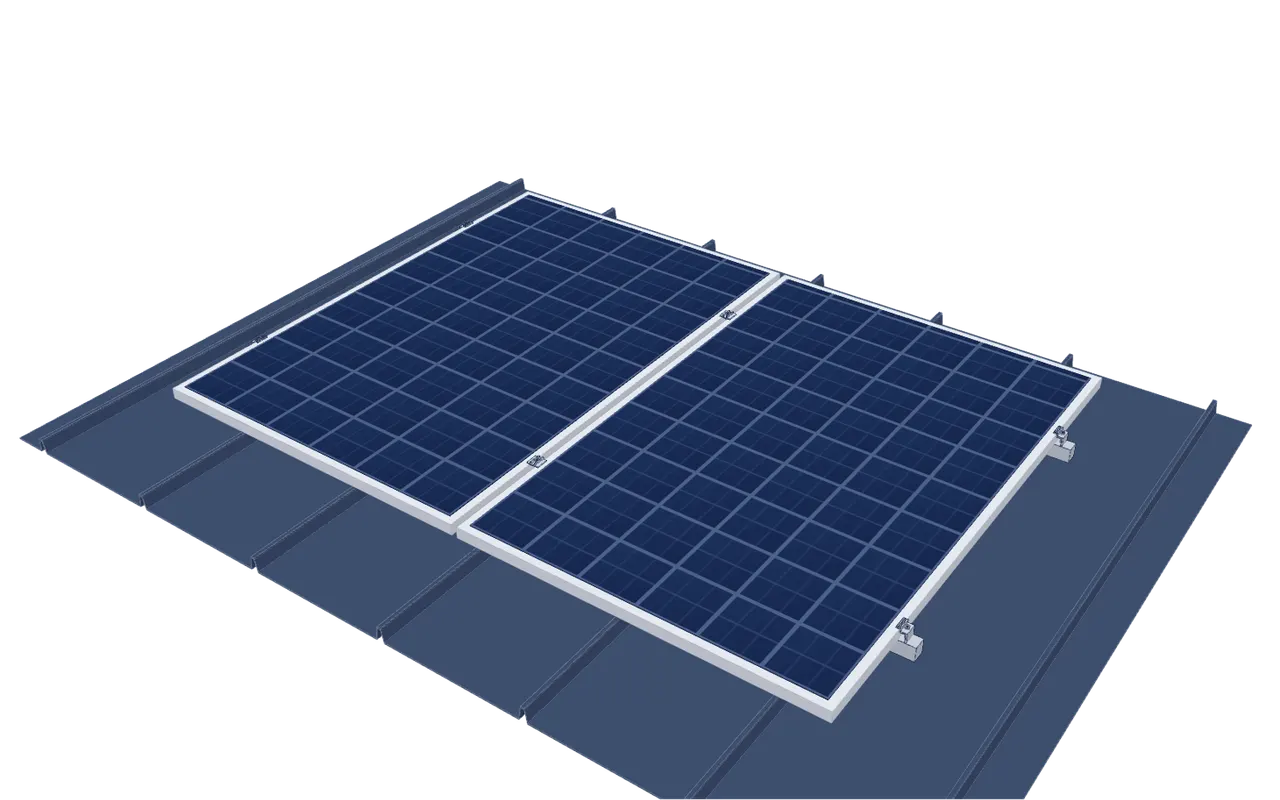
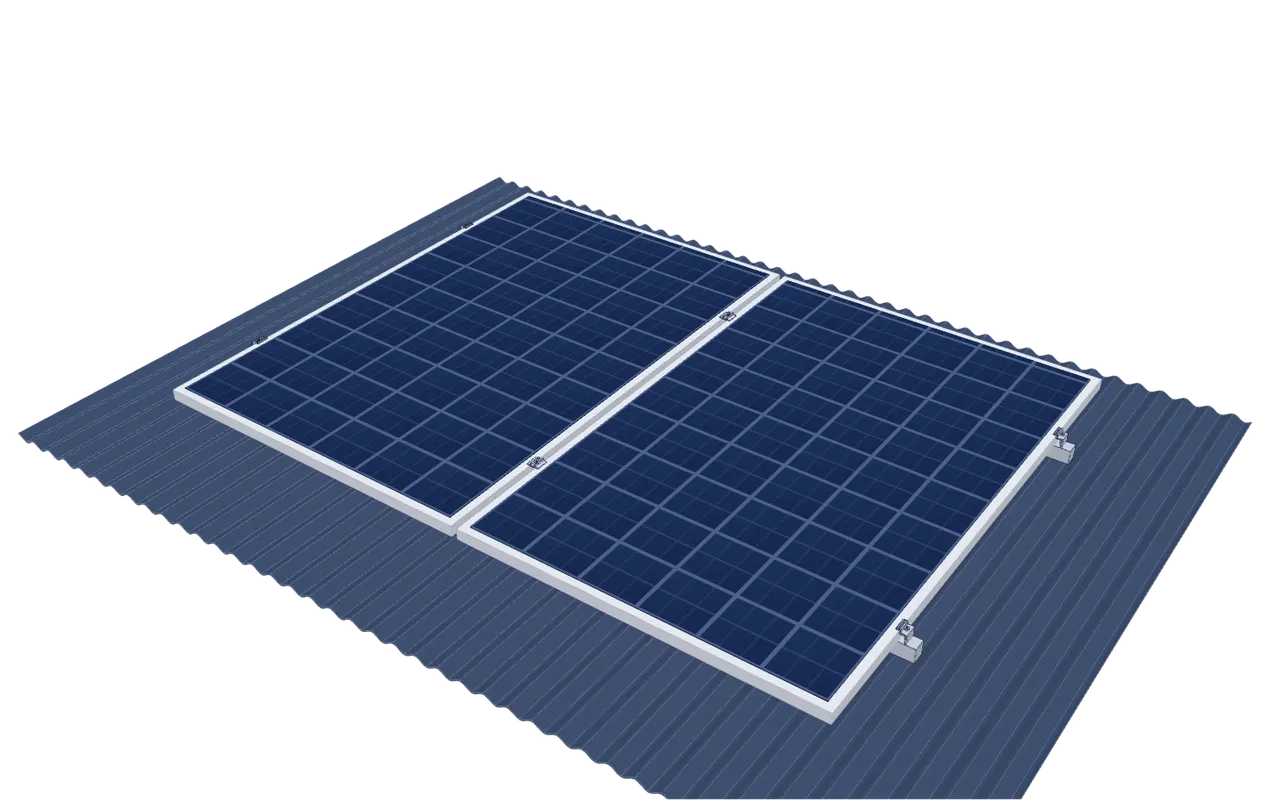
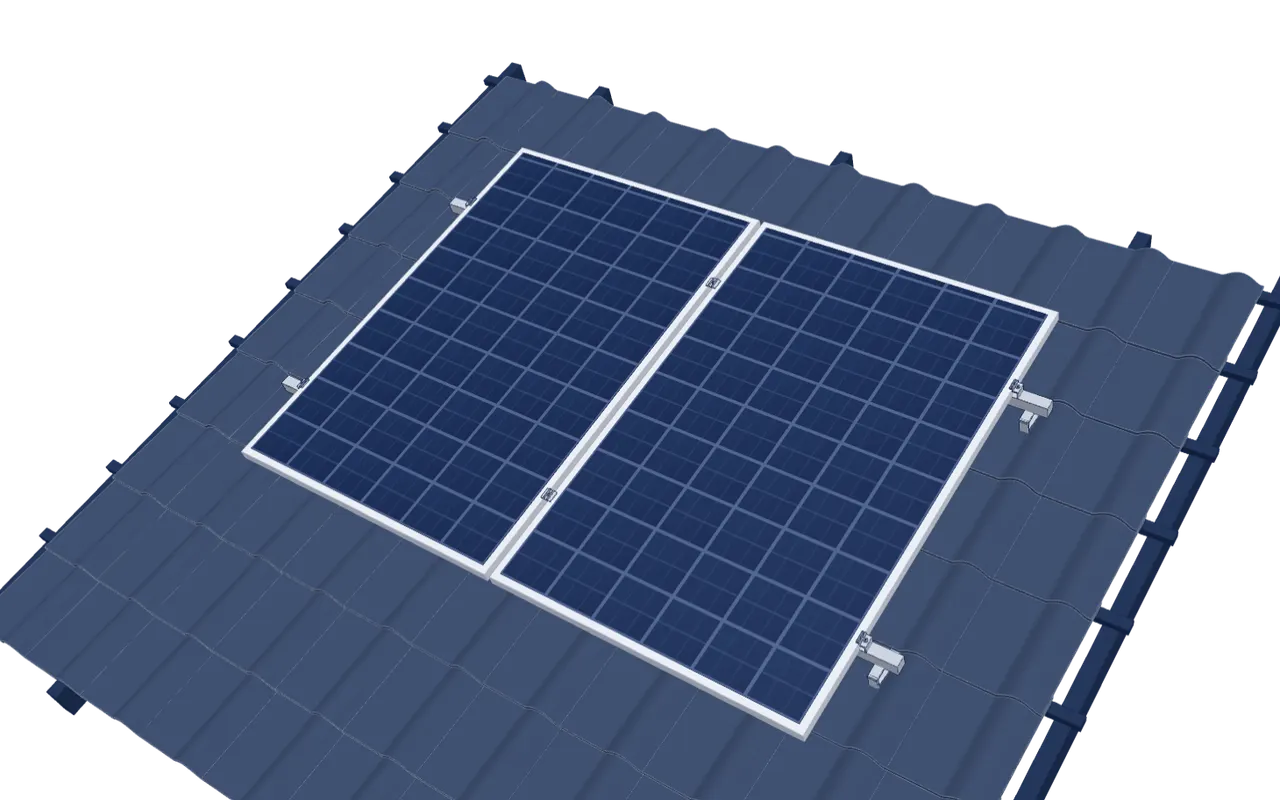


| Roof or site | Interface | Fixing | Kit family |
|---|---|---|---|
| IBR | IBR cleat with EPDM seal, fixed or adjustable; or an IBR mini rail | Penetrative | Flush mount |
| Klip-Lok / Saflok 410 and 700 | Saflok 410/700 cleat or mini-rail clamp on the rib | Non-penetrative | Flush mount |
| Corrugated | Corrugated mini rail, or L-brackets on an EPDM adaptor | Penetrative | Flush mount |
| Standing seam | Multi clamp on the seam | Non-penetrative | Flush mount |
| Novotexi 440 | Novotexi 440 cleat | Non-penetrative | Flush mount |
| Concrete or clay tile | Stainless steel hooks: portrait, landscape or adjustable | Fixed to the rafters | Tile and slate |
| Slate | Slate hook | Fixed to the rafters | Tile and slate |
| Concrete flat roof | Commercial tilt kits, or weighted ballast | Anchors or ballast | Tilt mount |
| Open ground | Aluminium sets, 2V5 to 2V20, or a ZAM steel set | Ground screws or concrete blocks | Ground mount |
| Parking area | Aluminium Econo, hybrid double-post or heavy duty single-post carport | Designed per site | Carport |
IBR roofs
IBR takes a penetrative fixing: the IBR cleat, fixed or adjustable, is screwed through the sheet over an EPDM seal and carries the rail. The IBR mini rail needs no long rail; the mini rails guide compares the two.
For more angle, the IBR side-fix tilt support takes 5°, 10° or 20° legs, as on Toyota, Kombat and Village Baker. Truda Foods (2,840 kWp) is flush mount on IBR.
Klip-Lok and Saflok roofs
Klip-Lok and Saflok 410 and 700 take a clamp on the rib, over a purlin, with no screw through the sheet: the Saflok 410/700 cleat, which carries the rail, or the Saflok 410/700 mini-rail clamp kit.
The clamp is accredited on Saflok 700 and Saflok 410. If the sheet's brand and model are unknown or not on that list, we recommend an on-site pull-out test before installing.
A Klip-Lok full-rail solution gives more airflow under the panels. Klip-Lok projects include a 1.75 MWp commercial rooftop and NutraPharm (880 kWp).
Corrugated roofs
Corrugated sheeting is fixed through the sheet: either the corrugated mini rail, with no long rail, or L-brackets on an EPDM adaptor, portrait or landscape, carrying the rail.
For a raised angle on corrugated roof sheet, you would incline using tilt kits mounted onto L-bracket corrugated kits with a full rail system, and not using the IBR side-fix tilt support which is only for IBR roof sheets.
Standing seam and Novotexi 440
Standing seam takes a multi clamp on the seam, and Novotexi 440 its own cleat; neither makes a hole in the roof. Bloem Plaza in Bloemfontein has standing seam roof mounts among its four Lumasol structures, and The Verve, Simbithi Office Park (211 kWp) is on Novotexi 440.
Concrete tile, clay tile and slate
Tile and slate roofs take SUS304 stainless steel hooks: portrait, landscape, adjustable (for uneven battens) and slate. Each is fixed to a rafter and carries the rail without bearing on the tiles, raised on a timber block where needed. Fitted hooks are never used as a step.


Outside a 0° to 30° roof slope, a project-specific engineering certificate is needed. Hook spacing follows the rafters; the figures are in the installation manual on the tile and slate page.
From the field
A correctly installed hook sits between two courses of tiles without putting pressure on the tile below. If it does bear on the tile, years of gusts flex the hooks and crack the tiles they rest on.
Flat concrete roofs
A flat concrete roof needs tilt kits. They are fixed with chemical anchors or expansion bolts, to the anchor's datasheet, or held by weighted ballast where the roof cannot be penetrated.
Ballast sits on concrete blocks over EPDM mats that protect the membrane, sized per panel from site-specific wind simulations. Westville Superspar has east-west ballast rows on its slab; on a new home in KwaZulu-Natal, high wind ruled ballast out, so the panels stand on 10° tripods.
What to send with the quote
- The roof profile and, for a clamp, the sheet's brand and model.
- The roof slope: the kits cover 0° to 30°.
- The roof height: above 20 m, a project-specific engineering certificate is needed.
- The module frame (30 mm or 35 mm) and the module size.
- The site's wind region and its corrosion class to ISO 9223.
Spacing is reduced on coastal sites and steeper tilts; we set it per site with our spacing calculator. The quote checklist has the rest, and the corrosion classes guide explains the classes.
What to order
- IBR: LMS-IBR1-KIT-PRO (fixed cleat), LMS-IBR2-KIT-PRO (adjustable cleat), LMS-MRAIL-PRO-KIT (mini rail), LMS-IBR3-KIT-PRO (side-fix tilt support).
- Klip-Lok / Saflok: LMS-KL1-KIT (cleat), LMS-KL1-MR-KIT (mini-rail clamp).
- Corrugated: LMS-COR-MR-KIT (mini rail), LMS-LB-COR-KIT-P and LMS-LB-COR-KIT-L (L-brackets, portrait and landscape).
- Standing seam: LMS-SS-KIT. Novotexi 440: LMS-NVT-KIT.
- Tile: LMS-TH1-KIT (portrait), LMS-TH2-KIT (landscape), LMS-TH4-KIT (adjustable). Slate: LMS-SH1-KIT.
- Concrete flat roof: LMS-COBE-FL-10-KIT, LMS-COBE-RL-10-KIT, LMS-COBE-EW-KIT.
- Clamps, every roof: LMS-EC30-35-KIT (end) and LMS-IC30-35-KIT (inter).
Questions
Which Lumasol kit fits an IBR roof?
Flush mount, penetrative: the IBR cleat with an EPDM seal on rail, or the IBR mini rail with no long rail. For a raised angle, the IBR side-fix tilt support takes 5°, 10° or 20° legs.
Can panels go on a Klip-Lok roof without drilling?
Yes. The Saflok 410/700 cleat and Saflok 410/700 mini-rail clamp kit grip the rib over a purlin, with no screw through the sheet, and the clamp is accredited on Saflok 700 and Saflok 410.
What if I do not know the make of the roof sheet?
For a clamp, we recommend an on-site pull-out test when the sheet's brand and model are unknown or not accredited. The quote form has an "Other or not sure" option for the profile.
Do tile hooks rest on the tiles?
No. The hook is fixed to the rafter and must not press on the tile; a timber block raises it where needed.
Which module frames do the clamps fit?
30 mm and 35 mm frames. The end clamp comes set for 30 mm; for 35 mm the bolt goes in the second hole, turned 90°.


